

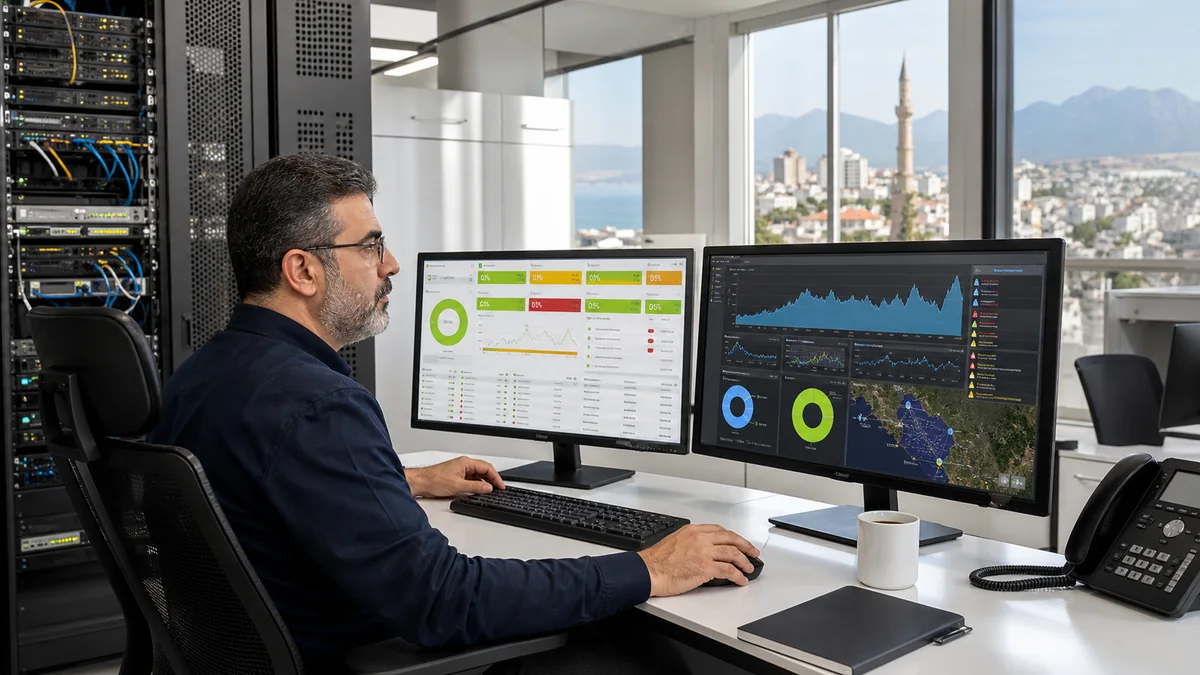
Sensor planning, distributed probes and actionable alarms
PRTG Network Monitoring Setup and Management
We build PRTG deployments from an inventory and sensor budget, then validate probe placement, credentials, dependencies, maintenance windows, alerts and reports.
Plan Your PRTG DeploymentMonitoring with a measured sensor scope
PRTG planning begins with the signals the organisation will operate
PRTG Network Monitor uses sensors to measure individual aspects of devices and services. A switch can require availability, interface, hardware and flow sensors; a server can require operating-system, storage, service, certificate and application checks. The design therefore begins with an inventory and a sensor matrix that identifies what matters, how often it should be measured and who will act when a limit is crossed.
Core and probe architecture
Collection is placed where credentials, traffic and systems are reachable
PRTG core server
The core stores configuration and monitoring data, evaluates sensors, handles notifications, serves the interface and produces reports.
Local probe
A local probe is installed with PRTG Network Monitor and performs collection close to the core for reachable systems and basic health monitoring.
Remote probes
Remote probes collect from branches, security zones or distributed systems. Their network path, identity, resource load and allowed connection are documented.
Sensor methods
Ping, SNMP, WMI, flow protocols, HTTP, APIs, virtualisation and cloud sensors have different prerequisites, visibility and performance impact.
Object hierarchy
Probes, groups, devices and sensors inherit settings. A planned hierarchy reduces repeated configuration while avoiding unintended credentials or limits.
Notifications and reports
Dependencies, schedules, maintenance windows, escalation, message content, maps and reports are designed around named owners.
Distributed collection
Probe placement is both a visibility and security decision
A probe should reach the systems it monitors without requiring broad, unnecessary access from the core network. Branch routing, firewall rules, DNS, time synchronisation, credentials and management interfaces are checked before installation. Resource-intensive sensors can be distributed when one probe would otherwise become a bottleneck.
The Paessler manual notes that sensor types create different loads. Basic Ping and SNMP checks are generally lighter than flow, VMware, WMI, receiver and other complex sensors. Probe capacity must therefore follow the selected methods and intervals, not a simple device count.
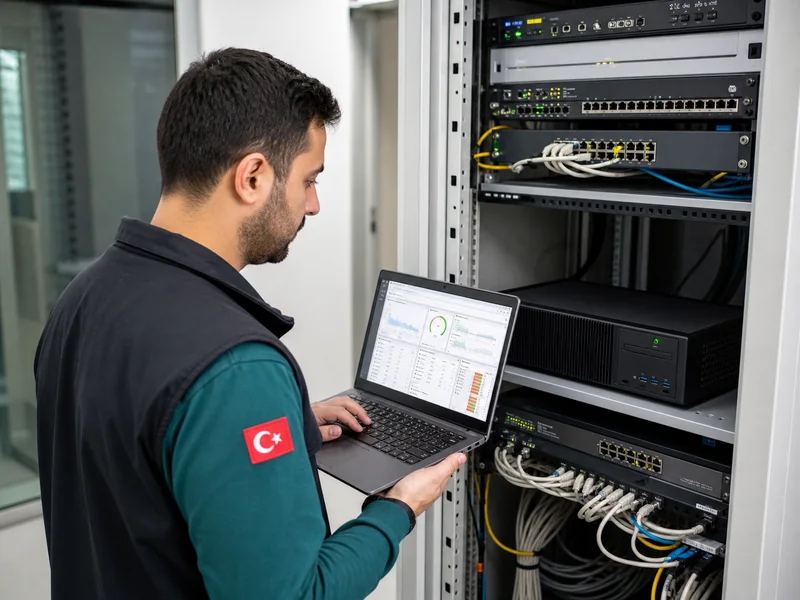
Sensor budget
The same number of sensors can create very different workloads
Sensor type
Availability, SNMP, WMI, flow, packet, virtualisation, cloud, receiver and custom sensors have different CPU, memory and network behaviour.
Scanning interval
A one-minute interval creates five times as many measurements as a five-minute interval. Faster is useful only when the business response requires it.
Channels and data retention
Channel count, historic data, toplists, logs and reports affect storage and user experience. Retention follows the operational and reporting need.
Probe distribution
Remote probes can reduce network and processing concentration, but each probe adds an operating component that must be monitored, updated and documented.
Practical note: licensing and platform size are reviewed against the planned sensor inventory. Automatic discovery is a starting aid, not a finished production scope.
Delivery process
Six stages from inventory to accepted alarms and reports
- 01
Inventory and business impact
Devices, interfaces, applications, links, owners, sites, dependencies, maintenance and critical service paths are recorded.
- 02
Sensor and licence matrix
Required checks, methods, intervals, channels, estimated load, sensor count, optional flow sources and reporting needs are documented.
- 03
Core and probe design
Platform resources, operating system, network zones, local and remote probes, credentials, firewall rules, backups and access roles are planned.
- 04
Pilot sensors
Representative Ping, SNMP, WMI, flow, HTTP, API and virtualisation sensors are tested before templates and inheritance are expanded.
- 05
Alerts, dependencies and reports
Limits, delays, parent relationships, maintenance windows, notification schedules, messages, maps and reports are validated with owners.
- 06
Acceptance and handover
Sensor state, missing data, probe health, alarm delivery, user roles, backup, runbook, licence record and open items are reviewed.
Alarm design
Dependencies and maintenance windows protect the team from avoidable noise
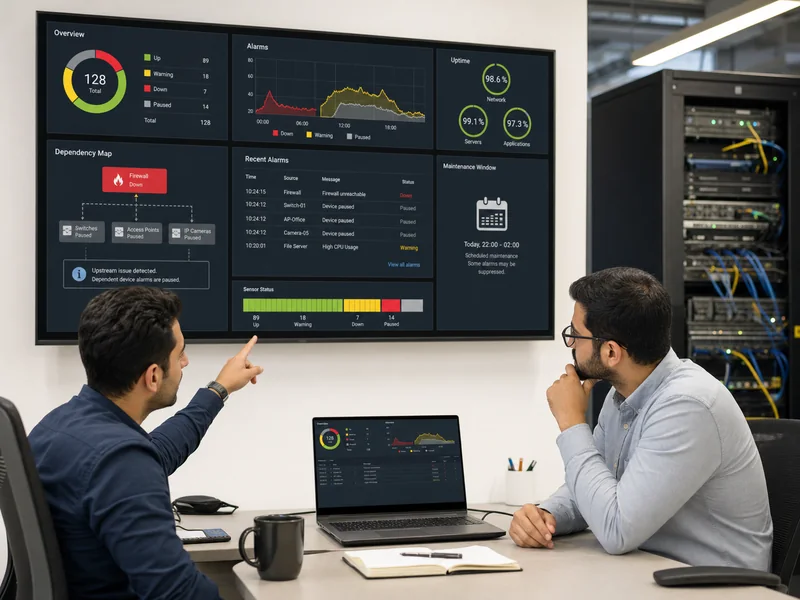
If an upstream router fails, the services behind it should not each create an independent urgent incident. Dependencies can pause child objects when the parent is down. Maintenance windows prevent planned work from generating false alarms. Notification delay and recovery settings prevent short transient conditions from repeatedly paging the team.
Every important notification is tested through its actual delivery channel. The message identifies the affected service, site, sensor, current value, duration and responsible team. Reports are designed separately for operations, capacity and management because those audiences need different evidence.
Operating model
Installation, platform management and 24/7 response are distinct services
Customer-operated PRTG
We install, configure, test and document the platform. The customer's team owns daily events, sensor changes and response after handover.
Co-managed PRTG
Platform health, probe changes, sensor tuning, maps, reporting and periodic review are divided between named customer and Biga Bilisim roles.
24/7 NOC service
Continuous review requires an agreed monitored scope, contacts, escalation, coverage, permitted response actions and reporting cadence.
Planning input
What to send for a PRTG scope review
- Inventory and topology
- Devices, interfaces, servers, virtual systems, applications, flow sources, branches, network zones and dependencies.
- Sensor expectations
- Required checks, intervals, SNMP and WMI availability, APIs, certificates, receiver sensors and any custom scripts.
- Platform and licence status
- Current PRTG version or new-install requirement, sensor count, licence details, core resources, probes and retention expectations.
- Operations
- Owners, maintenance windows, alert channels, reports, escalation contacts, coverage hours and handover or management preference.
Frequently asked questions
PRTG Network Monitoring Setup and Management FAQ
What is a sensor in PRTG?
A sensor monitors one aspect of a device or service, such as availability, interface traffic, CPU, storage, a certificate, an application endpoint or a flow source. One device can therefore require multiple sensors.
Why is a sensor inventory needed before licensing?
PRTG scope is driven by the number and type of sensors rather than device count alone. A sensor inventory helps estimate licensing, probe load, scanning intervals, data volume and which checks are genuinely useful.
When should a remote probe be used?
Remote probes are useful for branches, separated security zones, remote data collection and distributing demanding sensors. Placement also depends on routing, credentials, firewall rules and which systems should be monitored locally.
Do all PRTG sensors create the same load?
No. Ping and basic SNMP checks are generally lighter than WMI, flow, packet analysis, VMware, receiver and complex scripted sensors. Scanning interval, channel count and probe distribution also affect performance.
How can PRTG alarm noise be reduced?
Dependencies, appropriate limits, delay rules, maintenance windows, parent-child relationships, notification schedules and clear ownership reduce duplicate or unactionable alarms. Alerts are tested before handover.
Is PRTG management the same as 24/7 incident response?
No. Platform management covers sensor health, probes, configuration, updates, alert logic and reporting. Continuous event review and response require a separately defined NOC service with escalation and coverage responsibilities.
Can PRTG services be provided across Turkey?
Yes. Sensor planning, installation, probe configuration, dashboards, alerts and management can often be delivered remotely across Turkey. On-site verification is arranged where network segmentation, credentials or physical systems require local work.
Official technical references
- Paessler PRTG manual: core server
- Paessler PRTG manual: system requirements and sizing
- Paessler PRTG manual
Technical review date: . Product versions, licence terms, supported systems and sizing guidance are rechecked before implementation.
Discuss Your Requirements with Biga Bilisim
Send the company name, location, current environment, required outcome and preferred timeline. We will review the request and define the most practical next step.