

SENS addressable and conventional fire detection solutions
SENS Fire Alarm Systems in Antalya
Biga Bilisim supports SENS fire alarm projects for hotels, industrial sites, warehouses, offices, residential complexes, education, healthcare and commercial buildings in Antalya. The scope can cover survey, product selection, cabling, installation, programming, commissioning, testing, documentation and maintenance. Decisions are tied to the approved design, site risks and operating procedures rather than a generic equipment list.
Share the drawings and current system details for an initial technical review
The site location, building use, available floor plans, current panel and device inventory and target completion date are enough to start.
Direct technical answer
What is a SENS fire alarm system and where is it considered?
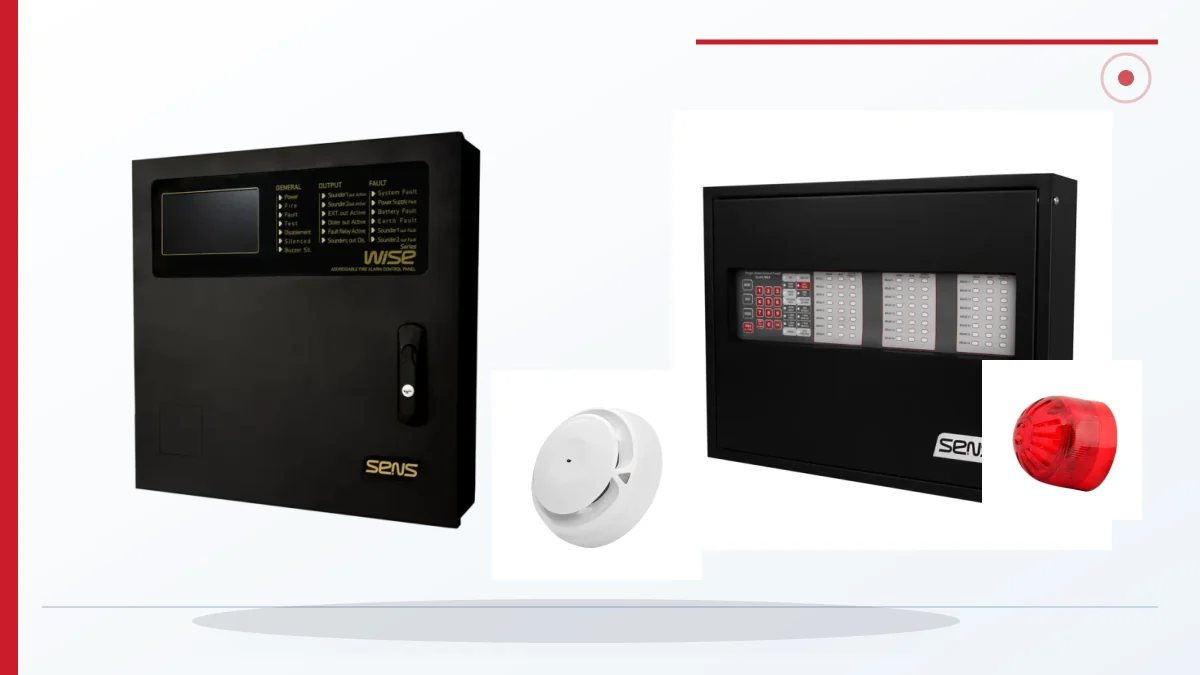
SENS is a Turkey-based manufacturer with addressable and conventional fire detection products, detectors, manual call points, sounders, beacons, input-output modules and supporting equipment. An addressable architecture is considered when individual device identity, precise event location, detailed fault information, programmable interfaces or future expansion are important. A conventional architecture can suit clearly divided applications where zone-level information is sufficient. The choice must follow the approved fire strategy, building layout, device distribution, integrations, maintenance plan and applicable requirements.
Product family
Panels and field devices are selected as one operating system
The official SENS catalogue groups its portfolio into addressable systems, conventional systems, gas detection and auxiliary equipment. Our review links each selected device to its purpose, environmental suitability, wiring method, control logic and acceptance test.
WISE addressable panels
Loop capacity is reviewed with device density, isolator placement, network requirements, event records, graphics needs and expansion plans.
Conventional control panels
Zone boundaries, devices per zone, end-of-line arrangements, spare capacity, alarm circuits and fault-finding requirements shape the choice.
Detectors and call points
Smoke, heat or combined detection is selected against building use, dust, steam, ceiling height, airflow, access and unwanted-alarm risk.
Sounders, beacons and modules
Audible and visual alarm coverage, monitored inputs and controlled outputs are tied to the approved cause-and-effect schedule.
Architecture choice
Addressable versus conventional is not simply a building-size decision
SENS addressable system
Each field device has an individual identity at the control panel. Alarm, fault, disablement and maintenance information can be traced to a specific device and recorded location. This can improve operation in complex layouts, high device counts, integrated sites and projects with planned expansion.
- Loop route and short-circuit isolator strategy
- Device address, label and drawing reference
- Cause-and-effect logic and controlled outputs
- Network, event records and future capacity
SENS conventional system
Alarm and fault information is displayed by zone. It can provide a straightforward solution where physical divisions are clear and individual device identification is not required. The zone plan, detector selection, wiring, power calculations and test records still need professional design and control.
- Matching physical and documented zone boundaries
- End-of-line configuration and cable continuity
- Alarm circuit load and audibility checks
- Fault access and future alteration planning
Model examples
Capacity claims are checked against the official document for the exact model
These examples show different roles within the SENS portfolio. They are not a pre-selected bill of materials. Final models and quantities follow the survey and approved design, and one model’s limits are not applied to another model without evidence.
W1-ACP-302
WISE 2-loop addressable panel
SENS presents this as a modular two-loop panel. Its model page states up to 240 devices per loop and expansion within the panel family up to 10 loops. The usable design must still account for device mix, topology, isolators, power and the approved project.
Open official product dataM9-CCP-208
Eight-zone conventional panel
The manufacturer presents this as an eight-zone EN 54-2 and EN 54-4 control panel and states up to 20 detectors per zone. Good design also depends on meaningful zone divisions, circuit load, cable conditions and access for fault investigation.
Open official product dataS6-CMD-200
Combined smoke and heat detector
This conventional model combines optical smoke and fixed-temperature heat detection. SENS lists EN 54-5 and EN 54-7. Combined sensing is not automatically the correct choice for every room; environmental conditions and unwanted-alarm risk still govern selection.
Open official product dataTSF-91
Conventional sounder beacon
This model combines audible and visual alarm functions, and SENS lists EN 54-3. Quantity and position depend on background noise, visibility, circuit load, power arrangements and the requirements that apply to the project.
Open official product dataAddressable design
Panel capacity must be read together with the real loop topology
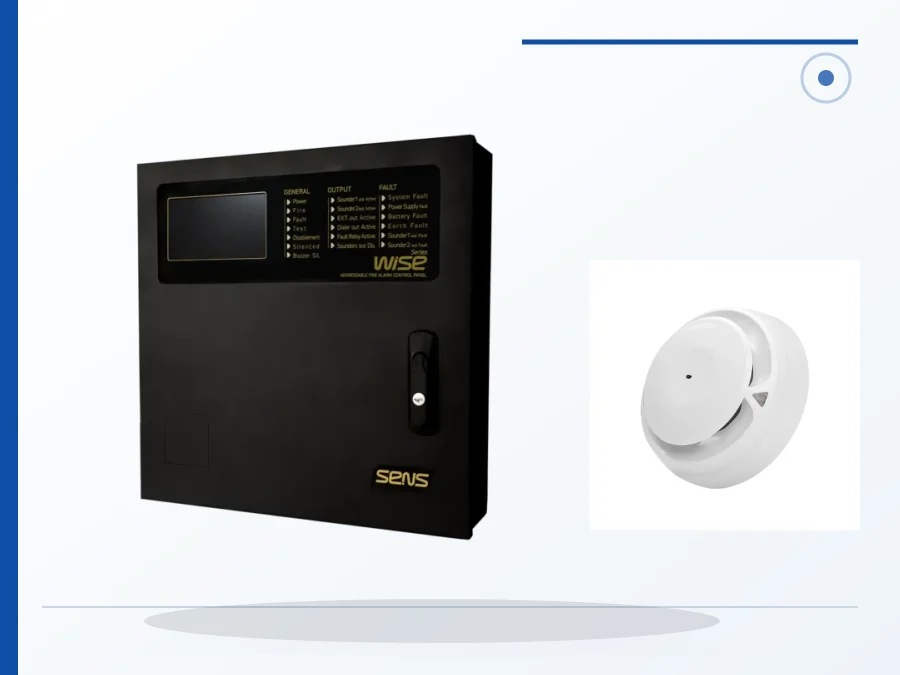
Every address, device label and drawing location should match one controlled list. Loop routes, the effect of a short circuit, isolator positions, cable type, return path, interface modules and programmed logic are checked against the project. Commissioning should include more than a successful alarm: open circuit, short circuit, missing device, mains failure, battery condition and interface faults also need to be observed and recorded.
Building scenarios
The same product family is not installed in the same way at every site
Hotels and tourism
Guest rooms, corridors, kitchens, plant rooms, parking, public areas and round-the-clock operation create different risks and unwanted-alarm conditions.
Industrial and manufacturing
Dust, heat, machinery, high ceilings, shifts, processes and maintenance shutdowns affect detector choice, access and test planning.
Warehouses and logistics
Rack height, stored goods, vehicle movement, large doors, airflow and changing storage layouts influence system design.
Offices and commercial sites
Tenant areas, shared spaces, IT rooms, suspended ceilings, access control and working hours have to be coordinated.
Healthcare and education
Evacuation difficulty, vulnerable occupants, continuous use and phased works shape installation and commissioning methods.
Agriculture and processing
Humidity, dust, chemicals, broad sites, metal structures and remote buildings may affect device suitability and topology.
Delivery process
Six controlled stages from survey to documented handover
- 01
Document and site inventory
Drawings, space use, current panels and devices, fault history, cable routes, interfaces and operating constraints are collected.
- 02
Architecture and product selection
The addressable or conventional architecture, panel capacity, loop or zone plan, detection methods, alarm devices and spare capacity are defined.
- 03
Implementation coordination
Cable paths, power, access height, phases, temporary protection, third-party interfaces and responsibility boundaries are documented.
- 04
Installation and labelling
Panels, devices, cables and connections are installed against manufacturer instructions and project conditions; addresses, zones and physical labels are matched.
- 05
Programming and testing
Loops or zones, alarm and fault behaviour, sounders, beacons, modules, power supplies and interfaces are verified through controlled tests.
- 06
Handover and maintenance start
The final device list, test results, cause-and-effect notes, operator briefing, open issues and maintenance recommendations are recorded.
Cause and effect
A fire panel output belongs to a defined and tested building scenario
Monitored inputs
Sprinkler flow, valve position, suppression equipment, pressure or other technical contacts are monitored when they are defined in the approved design.
Controlled outputs
Commands for lifts, ventilation, smoke control, door holders or access control follow an agreed scenario and use suitable interfaces and feedback.
Alarm transmission
Local alarms, remote monitoring and staff notification are planned with communication failures and the site response procedure in mind.
End-to-end testing
A changed output at the fire panel is not enough. The connected system must perform the expected action, and the result must be recorded.
Scope boundary: Commands to other building systems must be defined by the approved fire design and the responsible engineering disciplines. Biga Bilisim can implement and test the agreed technical interfaces; statutory design, permits and authority approvals remain separate responsibilities.
Conventional systems and upgrades
Zone-level simplicity does not remove the need for records and testing
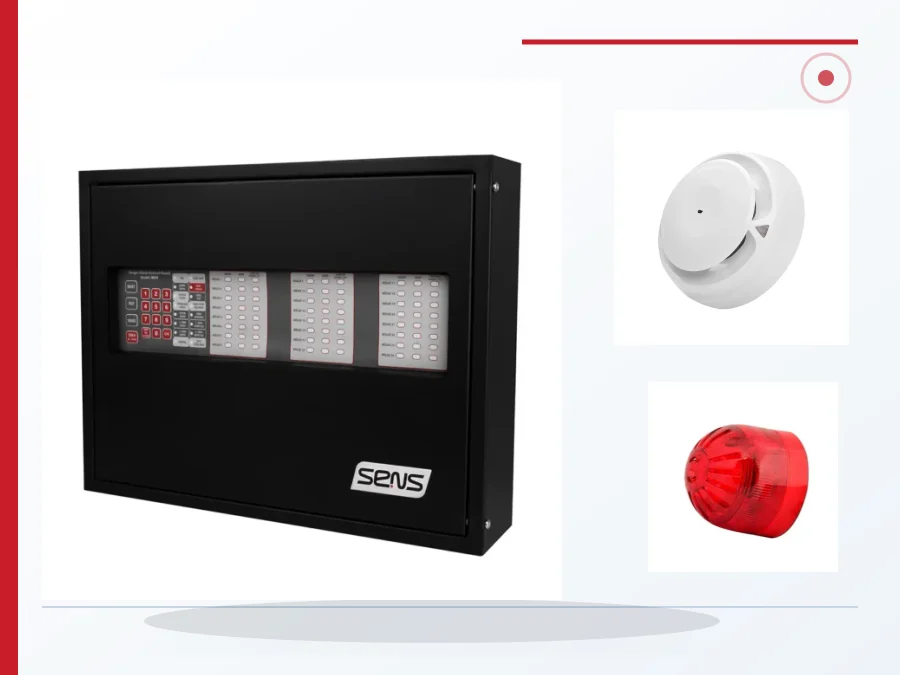
When an existing conventional system is upgraded, we verify zone drawings, end-of-line devices, detector bases, alarm circuits, cable insulation, power supplies, batteries and field-device compatibility. A cable that appears undamaged is not automatically suitable for reuse in a fire alarm application. The migration plan should state outage periods, temporary precautions, removal work, installation stages and the conditions for putting the new system into service.
Maintenance and fault management
Periodic inspection is more than checking for a green light on the panel
- Panel, power supply, battery, date, time and event-log review
- Loop, zone, alarm circuit and communication fault investigation
- Planned sampling or full device functional testing within scope
- Recording dirty, inaccessible, painted or physically damaged devices
- Call point, sounder, beacon, module and interface scenario tests
- Documenting disabled areas, duration, cause and compensating measures
- Comparing altered building areas with the device and drawing records
- Reporting faults, corrective action, retest results and open work
A recurring fault should trigger a review of cabling, moisture, dust, power, installation, addressing and environmental effects rather than repeated component replacement alone. A useful maintenance report states both what was tested and what could not be tested.
Quotation input
Build a deliverable scope, not just a product list
Equipment, installation, cabling, access work, programming, interfaces, testing, documentation, travel and maintenance are separated in the proposal. This lets you compare suppliers against the same technical scope instead of comparing total prices that include different work.
- Building information
- Location, use, floors, areas and operating hours
- Existing infrastructure
- Panels, devices, cabling, faults and maintenance history
- Project records
- Floor plans, fire design and cause-and-effect schedule
- Delivery expectation
- Target date, phases, outage limits, training and maintenance
Service area
On-site support across Antalya and project-based delivery for multi-site organisations
On-site survey and support can be planned in Muratpasa, Kepez, Konyaalti, Dosemealti and Aksu, as well as Kemer, Serik and Belek, Manavgat, Alanya, Kas, Kumluca, Finike, Demre, Elmali, Korkuteli, Gazipasa and other Antalya districts. For chains, warehouses, factories or branches elsewhere in Turkey, a common device schedule, test process and documentation template can be prepared for project-based delivery.
Frequently asked questions
Technical and commercial questions about SENS fire alarm systems
What information is needed to plan a SENS fire alarm system?
The first review needs the building use, floor and compartment plans, approximate area, occupancy profile, ceiling conditions, escape routes, existing fire documentation, current panel and device inventory, integration requirements and any operational constraints. A site survey is then used to verify cable routes, environmental conditions, alarm audibility, device access and the practical boundaries of the work. Product quantities should not be finalised from a floor area alone.
Should we use an addressable or conventional SENS system?
The decision is based on the approved fire strategy, building layout, number and distribution of devices, required event location detail, cause-and-effect functions, future expansion and operating needs. Conventional systems identify an alarm by zone and can be appropriate for clearly divided, limited installations. Addressable systems identify individual devices and provide more detailed event, fault and maintenance information. Building size is useful context, but it is not the only decision criterion.
Can an existing non-SENS system be migrated to SENS equipment?
A migration can be assessed, but existing detectors, call points, sounders, modules, bases, cables and end-of-line arrangements cannot be assumed to be compatible. The survey records the installed devices, loop or zone wiring, cable condition, power supplies and current cause-and-effect functions. The resulting plan identifies what may remain, what must be replaced, how temporary protection will be handled and how the change will be tested before handover.
Does EN 54 marking make the whole installation compliant?
No. Product conformity is important, but the compliance of a complete installation also depends on the approved design, device selection and placement, cabling, power supplies, alarm routing, interfaces, installation quality, commissioning tests, documentation and local requirements. Manufacturer data and applicable regulations must be read together. This page is not a substitute for an approved fire engineering design or authority decision.
Can SENS panels control lifts, ventilation or access doors?
Approved cause-and-effect designs may require monitored outputs or interfaces for systems such as lifts, smoke control, ventilation, magnetic door holders, access control or other building functions. Each interface must be defined by the responsible project disciplines, implemented with suitable modules and tested end to end. We do not add an automation scenario simply because the panel has a programmable output.
What is included in commissioning and handover?
The agreed scope can include panel and power checks, zone or loop verification, device addressing, label and location matching, detector and call point tests, sounder and beacon tests, fault simulations, interface tests, cause-and-effect confirmation, battery and charger checks, event log review, operator briefing and an open-issues list. Handover records are matched to the final installed system rather than copied from an early quotation.
How often should a SENS fire alarm system be maintained?
The maintenance programme should follow applicable legislation, the approved fire safety arrangements, manufacturer instructions, site risk and operating conditions. Routine user checks and professional periodic inspections have different purposes. Dust, humidity, construction work, device access, battery age, recurring faults and previous test results should influence the service plan. Any impairment should be recorded and managed through the site fire safety process.
Do you provide support outside central Antalya?
Yes. Survey, installation and technical support can be planned for Muratpasa, Kepez, Konyaalti, Dosemealti, Aksu, Kemer, Serik and Belek, Manavgat, Alanya and other Antalya districts. Multi-site projects elsewhere in Turkey can be reviewed separately. Travel, access permissions, working hours, accommodation and local coordination are stated in the proposal when relevant.
How can an international company request a quotation?
Send the site location, building use, available drawings, current equipment list, required completion date, preferred communication language and any known integration requirements to sales@bigabilisim.com. You can also call +90 532 595 04 99. The first response separates design assumptions, equipment, installation, commissioning, documentation, travel and ongoing support so that the commercial scope is clear.
Primary sources: SENS Global · SENS product families · Turkey Ministry technical specifications · Fire protection regulation reference
Technical content reviewed on 24 July 2026. Product data, regulations and project conditions can change; the current manufacturer documents and applicable official requirements are checked again before quotation and installation.
Request a survey and quotation for a SENS fire alarm system
Whether you are replacing an existing system or planning a new site, we can review the drawings, device schedule, operating constraints, tests and handover records before defining the commercial scope.